

Why Every Lawyer Should Be on Social Media
When someone needs a lawyer, they rarely start by making a phone call. They search online, compare firms, and form an impression long before the first consultation. If your firm isn't visible, another lawyer is.
Legal services are built on trust, and trust starts before a client ever contacts you. People facing a divorce, business dispute, estate planning, or immigration matter are looking for clarity and confidence—not entertainment.
The American Bar Association reports that 80% of law firms have a social media presence, making an active online presence the norm rather than the exception (americanbar.org)
Good social media helps law firms do several important things:
- Explain what kind of legal services they offer.
- Make their practice areas easy to understand.
- Answer common questions before the first call.
- Show calm, professional judgment.
- Build familiarity with local clients.
- Support referrals from past clients and business partners.
- Keep the firm visible between major word-of-mouth moments.
For a small law firm, this matters because people rarely choose a lawyer based on one post. They choose a lawyer after repeated signals of credibility.
Which Platforms Are Worth Using?
Not every platform deserves your time. For busy attorneys and solo legal professionals, the best platform is not always the biggest one. It is the one where your potential clients, referral partners, and local audience are most likely to notice you.
Here is how I usually think about the main platforms.
LinkedIn is one of the strongest platforms for lawyers who work with professionals, businesses, founders, executives, real estate professionals, financial advisors, HR teams, or other referral partners.
It works well for:
- Business attorneys.
- Real estate lawyers.
- Employment lawyers.
- Immigration attorneys serving professionals.
- Estate planning lawyers.
- Lawyers who rely on referrals from accountants, brokers, consultants, and other professionals.
The content does not need to be formal. In fact, overly formal content often gets ignored. The best LinkedIn posts usually sound like a smart professional explaining one useful point clearly.
For example:
- “Three contract clauses small business owners often ignore.”
- “What founders should check before signing a partnership agreement.”
- “Why a handshake deal can become expensive later.”
Here are a few lawyers who are doing it really well on linkedin:
James Helm, CEO of TopDog Law: James regularly uses LinkedIn to share insights on law firm growth, leadership, and the business side of running a legal practice, showing that lawyers can build authority by sharing expertise beyond legal analysis.
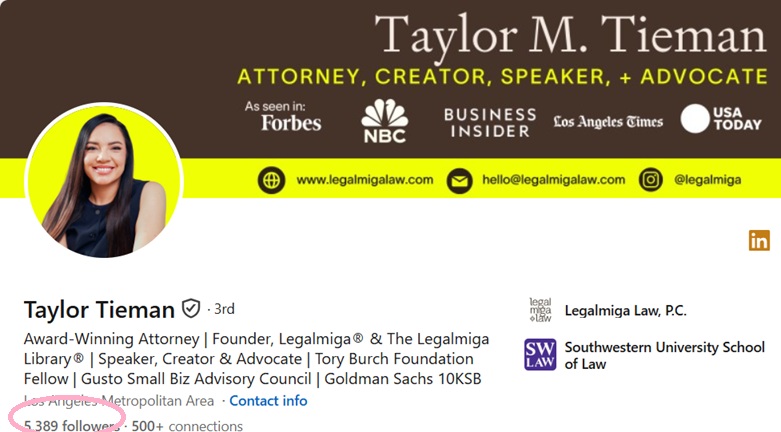
Taylor Tieman, Attorney: Taylor demonstrates how consistent LinkedIn posts that explain legal topics and discuss the realities of practicing law can help build both professional credibility and a recognizable personal brand.
Facebook still matters for local law firms.
It is especially useful for lawyers who serve families, homeowners, local businesses, and community-based clients.
It works well for:
- Divorce attorneys.
- Personal injury lawyers.
- Real estate lawyers.
- Estate planning attorneys.
- Criminal defense attorneys.
- Local legal practitioners who want community visibility.
Facebook also supports local trust. People may not comment on a legal post, but they may notice it. They may save it. They may send it to someone. They may remember your name later.
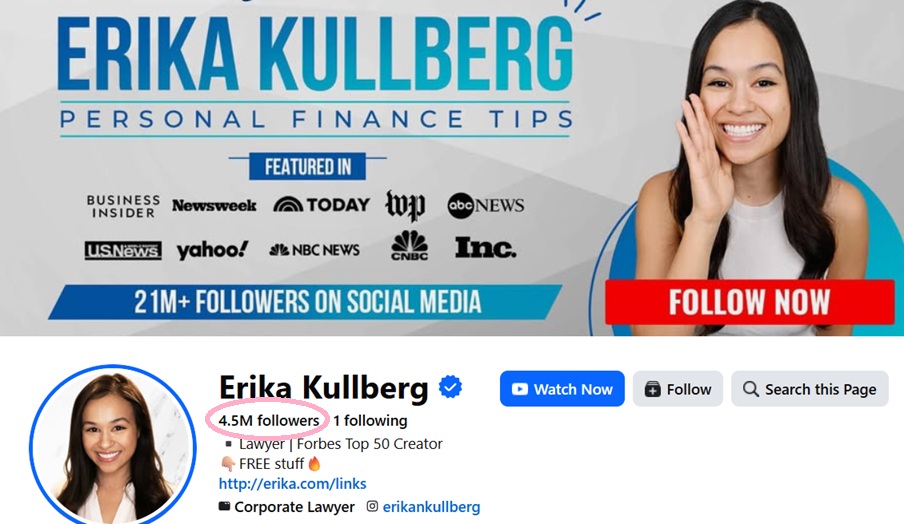
Erika Kullberg is a great example of a lawyer using social media the right way. Erika has built a large Facebook audience by turning complex legal and financial topics into practical, easy-to-understand advice, proving that educational content can reach far beyond traditional legal marketing.
Instagram is useful when you want to make legal topics feel more approachable.
It works well for:
- Short educational carousels.
- Reels answering common questions.
- Attorney introductions.
- Office culture posts.
- Community involvement.
- Simple legal checklists.
For lawyers, Instagram should not look too playful or generic. A strong Instagram presence for a law firm should feel clean, professional, human, and easy to understand.
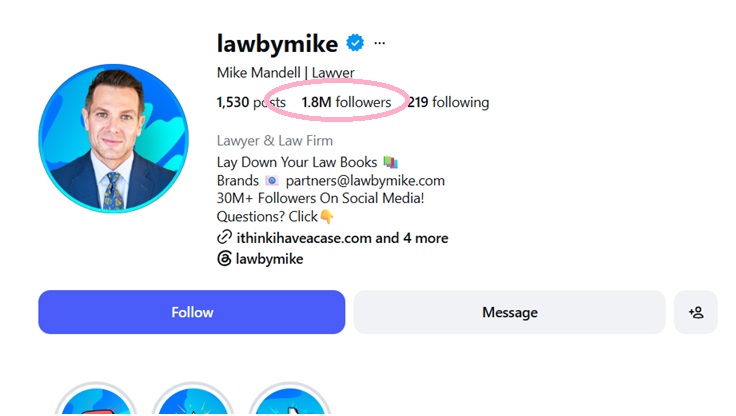
Need some inspiration? Take a look at Mike Mandell's Instagram. has mastered the art of making people stop scrolling. Using relatable scenarios, strong hooks, and clear explanations, he transforms everyday legal questions into content that's both entertaining and educational.
YouTube and Short-Form Video
Video is powerful because clients often want to hear how a lawyer explains things.
You do not need a studio. You do not need dramatic editing. You need useful answers.
Good video topics include:
- “What happens during the first consultation?”
- “What documents should you bring?”
- “What should you not do after receiving a legal notice?”
- “When should you speak to a lawyer before signing?”
Short videos can also be reused across LinkedIn, Instagram, Facebook, and YouTube Shorts.
X
X can be useful for lawyers who comment on policy, business, technology, litigation trends, or public issues. But for most local law firms, it is not the first platform I would prioritize.
If time is limited, start with one or two platforms.
For most small law firms, I would usually begin with:
- LinkedIn for professional trust and referrals.
- Facebook for local visibility.
- Instagram for approachable educational content.
Only add more platforms once the basic content rhythm is working.
Post Ideas
Your clients already give you content ideas every week. Every repeated question, misunderstanding, concern, objection, or intake issue can become a helpful post.
And if you ever run out of ideas, look beyond your own office. Browse Reddit, local Facebook groups, Quora, or legal forums to see the questions people are asking every day.
- r/Ask_Lawyers (12k+ members) people ask lawyers straightforward legal questions and get answers from verified legal professionals rather than the general public.
- r/LegalAdviceUK (70k+ members) – Thousands of UK residents share everyday legal problemsfrom landlord disputes to employment issues offering a real-world view of the questions clients ask before
Here are some content ideas your clients will actually find useful.
Educational Posts
These help people understand a legal topic without overwhelming them.
- “What is a demand letter?”
- “What does power of attorney actually mean?”
- “What happens after you file for divorce?”
- “What should a small business owner check before signing a vendor contract?”
Myth Posts
These work because people often act on bad assumptions.
- “Myth: You only need a lawyer when something goes wrong.”
- “Myth: A verbal agreement is always enough.”
- “Myth: Estate planning is only for wealthy families.”
- “Myth: You should wait before getting legal advice.”
Checklist Posts
Checklists are easy to save and share.
- “Bring these documents to your first consultation.”
- “Before signing a lease, check these items.”
- “Before hiring your first employee, review this list.”
- “After a car accident, keep these records.”
Practice Area Posts
Use your practice area to make the content specific.
- A divorce attorney can post about communication mistakes during separation.
- A real estate lawyer can post about title issues, closing documents, or contract deadlines.
- A business attorney can post about founder agreements, vendor contracts, and liability.
- An estate planning lawyer can post about wills, trusts, guardianship, and beneficiary mistakes.
- A criminal defense attorney can explain what to do after receiving a summons or police call.
Specific content feels more useful than general content.
“Legal tips for everyone” is too broad.
“What small business owners should check before signing a commercial lease” is much stronger.
Process Posts
People are often nervous because they do not know what happens next.
Process posts reduce that fear.
- “What happens in the first consultation?”
- “How I review a contract.”
- “What happens after you send us your documents?”
- “How long does a typical closing process take?”
Client Question
These are often the easiest posts to write.
Use the format:
- “A common question I get is…”
- “Many clients ask…”
- “One thing people often misunderstand is…”
- “Before you call a lawyer, it helps to know…”
Do not reveal client information. Keep it general and educational.
Local Posts
Local content can help lawyers feel connected to the community they serve.
- Local business legal reminders.
- Community event participation.
- Local real estate market issues.
- Seasonal reminders for families, homeowners, or small businesses.
- Local office updates.
A law firm does not need to look like a media company. It needs to look present, useful, and trustworthy.
Legal Ethics and Advertising Rules
The myth is that ethics rules mean lawyers should avoid social media completely.
That is not true.
But lawyers do need a more careful content process than many other businesses.
This article is marketing guidance, not legal or ethics advice. Every lawyer should check the professional conduct rules in their own jurisdiction before publishing content, especially around advertising, testimonials, case results, direct solicitation, specialization claims, and client confidentiality.
Start with the simple rule: avoid false or misleading claims, protect confidential information, and never imply that a result is guaranteed.
Here are the main areas to watch.
Do Not Promise Outcomes
Avoid language like:
- “We will win your case.”
- “Guaranteed results.”
- “Best lawyer in the city.”
- “We get every client paid.”
- “You will not lose your home.”
Even if the intent is marketing, claims like these can create serious problems.
A better approach:
- “We help clients understand their options.”
- “We guide business owners through contract disputes.”
- “We help families prepare estate plans with clarity.”
- “We represent clients in real estate transactions and closing issues.”
Protect Client Confidentiality
Never share identifying client details unless you have proper permission and the content complies with applicable rules.
Even if you remove a name, details may still reveal the person.
Be careful with:
- Case stories.
- Screenshots.
- Documents.
- Court details.
- Unusual fact patterns.
- Photos of clients.
- Reviews that mention private facts.
When in doubt, make the example general.
Be Careful With Comments and DMs
Social media makes it easy for people to ask legal questions in public.
A person may comment, “My landlord did this. What should I do?”
Do not provide specific legal advice in a comment thread.
A safer response may be: “Thanks for your question. Because every situation depends on specific facts, it is best to speak directly with a lawyer in your jurisdiction.”
You can invite them to contact the office, but avoid creating confusion about whether an attorney-client relationship has started.
Use Disclaimers Where Needed
Some lawyers include disclaimers on profiles, websites, or posts.
- “This post is for general information only.”
- “This is not legal advice.”
- “Viewing this post does not create an attorney-client relationship.”
- “Prior results do not guarantee a similar outcome.”
Disclaimers do not fix every problem, but they can help clarify the nature of the content.
Review Before Publishing
For lawyers, content should not be published casually.
Create a simple review checklist:
- Is this accurate?
- Is this too specific?
- Could it reveal client information?
- Does it imply a guaranteed result?
- Is it clear that this is general information?
- Does it match our jurisdiction’s advertising rules?
- Is the tone professional?
I prefer building lawyer content around education, not hype. Educational content is usually safer, more useful, and more aligned with how people choose legal services.
Common FAQ We Get
Should lawyers use social media?
Yes. Social media helps lawyers build trust before the first call and supports referrals, local visibility, and professional credibility.
Which platform is best for attorneys?
LinkedIn is strong for professional referrals. Facebook and Instagram are useful for local visibility and client education.
How often should a law firm post?
Three to four times per week is enough for many small law firms. Consistency matters more than posting every day.
Can lawyers post case results?
Sometimes, but rules vary. Avoid guarantees, protect confidentiality, and check your local bar rules before posting results.
What should lawyers avoid posting?
Avoid specific legal advice, client details, misleading claims, guaranteed outcomes, aggressive attacks, or anything that could create confusion.
Can I help lawyers create social media content?
Yes. I help lawyers plan, write, design, and organize social content around their practice area, audience, and professional voice.