

A potential client finds your salon on Instagram at 10:30 at night.
She scrolls through your photos, checks your highlights, looks for prices, reads a few comments, and tries to understand one thing: “Can I trust this place with my hair, nails, skin, brows, lashes, or beard?”
That decision may happen before she ever visits your website, calls the salon, or asks a friend.
For beauty salons, barbershops, nail salons, hair salons, and independent hairstylists, social media works best when it helps people make a decision. A good feed shows your work, explains your services, answers small doubts, and makes the next step easy.
When a beauty business comes to me, I usually look for one thing first: is the feed helping people book, or is it only showing that the salon exists?
Why social matters for beauty salons
Beauty is personal. People are not just buying a haircut, manicure, brow treatment, facial, lash set, or beard trim. They are trusting someone with how they look and feel.
That is why your social media has to do more than show a pretty result. It needs to reduce hesitation.
A potential client may be asking:
- Can they achieve the look I want, or will I leave disappointed?
- Have they worked with hair like mine? (Curly, thick, fine, damaged, color-treated, etc.)
- Do their before-and-after photos look like real clients?
- Will they listen to what I want, or push their own style?
- Does the salon feel clean, welcoming, and professional?
- Will I know the price before I sit down?
- Can I trust them with a big change, like going blonde or cutting off six inches?
- Will I feel comfortable if this is my first visit?
A hair salon can post a beautiful blonde transformation and get attention. But if the caption explains that the result took two sessions, included a gloss treatment, and was designed for lower-maintenance grow-out, the post becomes much more useful.
A nail salon can post a close-up of a perfect set. But if the caption says, “short almond builder gel for a client who types all day and wanted something strong but natural,” the post suddenly speaks to a specific person.
That is the difference between content that only looks nice and content that helps someone book.
Many salon owners already have the raw material. Every appointment creates potential content: the consultation, the before photo, the process, the final result, the client reaction, the aftercare tip, and the common question that came up in the chair.
Best platforms for beauty salons
For most small beauty businesses, the best starting point is Instagram, supported by Facebook and Google Business Profile. TikTok can also work well if you can create short videos consistently.
Instagram is usually the main platform for beauty salons because the services are visual and the audience expects to browse. It works especially well for hair transformations, nail designs, lash and brow results, barbershop cuts, makeup looks, skincare before and afters, salon culture, client testimonials, and short educational Reels.
Successful Instagram accounts:
clawzbydior_ (LA Nail Tech): built a loyal following by treating every manicure like a piece of art, combining bold, trend-driven nail designs with high-quality close-up videos that showcase both creativity and craftsmanship.
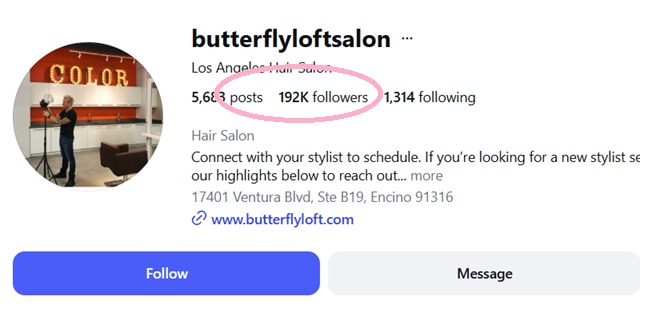
butterflyloftsalon (Hair Salon): keeps its audience engaged by consistently showcasing dramatic client transformations, highlighting the work of individual stylists, and giving followers a behind-the-scenes look at the salon's creative culture
Facebook is still useful for local salons, especially if your clients are active in local communities. It works well for reviews, local recommendations, before-and-after albums, offers, holiday updates, last-minute availability, and community posts.
For many salons, Facebook will not feel as exciting as Instagram, but it can still influence bookings. A client may discover you from a recommendation, then check your page for reviews, opening hours, and recent activity.
Successful Facebook account:
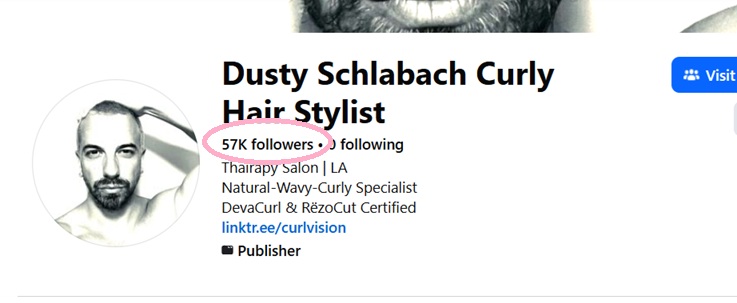
Dusty Monroe Schlabach (Salon Los Angeles): His unique success on Facebook is driven by cross-posting his viral TikTok curly hair transformations. Facebook's older demographic appreciates his thorough, step-by-step explanations of curly hair care, turning his local Pasadena chair into a destination for clients across the country.
TikTok is strong when your content has movement, process, transformation, education, or personality. Good TikTok ideas include quick transformations, “watch me fix this” videos, beauty myths, client reaction clips, product mistakes, service comparisons, salon humor, and day-in-the-life content.
TikTok does not need to look perfect. In many cases, clear and real content performs better than content that feels overly polished.
Google Business Profile is not a social platform in the usual sense, but it is essential for local salons. When people search for “hair salon near me,” “nail salon open now,” “barber near me,” or “lash lift near me,” your Google presence can influence whether they click, call, book, or move on.
Your profile should support your social media by showing consistent photos, services, hours, location, reviews, and contact details. If your Instagram says you specialize in balayage, bridal makeup, curly cuts, beard shaping, gel extensions, or brows, your Google profile should make that clear too.
Content pillars
Content pillars make social media easier because they give your salon repeatable categories. Instead of asking, “What should I post today?” every time, you build content around the main reasons people follow, trust, and book a beauty business.
I usually recommend these core pillars:
- Results and transformations: Show the finished work, but add context. Explain what the client wanted, what service was done, and who the result is best for. A blonde transformation, builder gel set, fade, brow lamination, or gloss treatment becomes stronger when people understand what to book.
- Education and aftercare: Share practical tips that help clients choose and maintain services. Examples include how often to book a refill, how to make color last longer, what to avoid after a lash lift, or when to choose builder gel instead of gel polish.
- Process and behind the scenes: Show the care behind the result. Color mixing, nail prep, tool cleaning, consultation moments, beard shaping, product selection, and finishing touches all help people understand your professionalism before they visit.
- Social proof: Use reviews, client selfies, tagged posts, testimonials, repeat visits, and short client stories. A simple review can build trust, but a review with context helps future clients imagine their own experience.
- Service guidance: Many clients know the look they want, but not the service name. Use posts that compare balayage vs highlights, gel polish vs builder gel, classic lashes vs hybrid lashes, taper fade vs skin fade, or brow tint vs brow lamination.
- Availability and booking reminders: Your feed should also help people take action. Post last-minute openings, seasonal booking reminders, new client availability, bridal trial updates, or refill reminders.
- Personality and salon culture: Show the feeling of the salon. Is it calm, fun, stylish, professional, friendly, private, quick, or luxurious? People often choose a beauty salon because of the experience, not only the result.
This is where I can help most. I learn the salon, review the website, social profiles, services, audience, local competitors, and existing content. Then I create the strategy, content pillars, captions, visuals, videos, and calendar around the actual business. The owner still reviews everything before it goes live, because beauty content needs accuracy, taste, and control.
What About Local?
A follower in Phoenix is unlikely to book a haircut in Boston, no matter how much they love your Reels. The woman who lives five minutes away, drives past your salon every morning, and has been quietly watching your Instagram for the past month is the one who fills your appointment book.
Whether you run a beauty salon, hair salon, barbershop, or nail studio, make your location impossible to miss.
- Mention neighborhoods like SoHo, Buckhead, or Old Town in your captions.
- Tag your salon, the street, or nearby landmarks in every post.
- Add your city and specialty to your bio (e.g. "Blonde Specialist • Tampa, FL").
- Use hashtags clients actually search, like #AustinHair, #ChicagoBalayage, or #PhoenixNails.
- Partner with local bridal boutiques, photographers, cafés, or fitness studios.
- Post about prom season, wedding weekends, homecoming, or your town's annual festival.
- Display your address, opening hours, parking, and salon entrance clearly.
Do not overdo hashtags. A few relevant local hashtags are better than a long block of random tags.
A stronger caption is not “beautiful hair transformation.” It is “soft brunette balayage for a client in Leeds who wanted something warm, natural, and easy to maintain.”
A stronger nail post is not “holiday nails.” It is “holiday gel nails in Brooklyn, now booking December appointments.”
Local wording helps the right people understand that you are close enough to book.
Reviews are part of local marketing too. Social media creates interest, but reviews often confirm the decision. When a potential client sees strong content on Instagram and then finds good reviews on Google, trust increases.
Common FAQ we get
How often should a beauty salon post on social media?
Three to five posts per week is a strong starting point. If that feels too much, post three useful pieces consistently.
What is the best platform for beauty salons?
Instagram is usually the best starting point because beauty is visual. Facebook and Google Business Profile also matter for local trust and discovery.
What should I post if I do not have many before-and-after photos?
Post service explanations, aftercare tips, behind-the-scenes clips, client questions, reviews, product advice, and availability updates.
Can social media really bring bookings to a small salon?
Yes, when the content is clear, local, consistent, and connected to an easy booking process. Likes alone are not the goal.
Should barbershops post differently from beauty salons?
Yes. Barbershops should show consistency, clean results, beard work, personality, and practical guidance on what clients should ask for.
How can I save time creating salon content?
Use a weekly structure, capture content during appointments, reuse common client questions, and plan posts ahead instead of starting from scratch daily.